
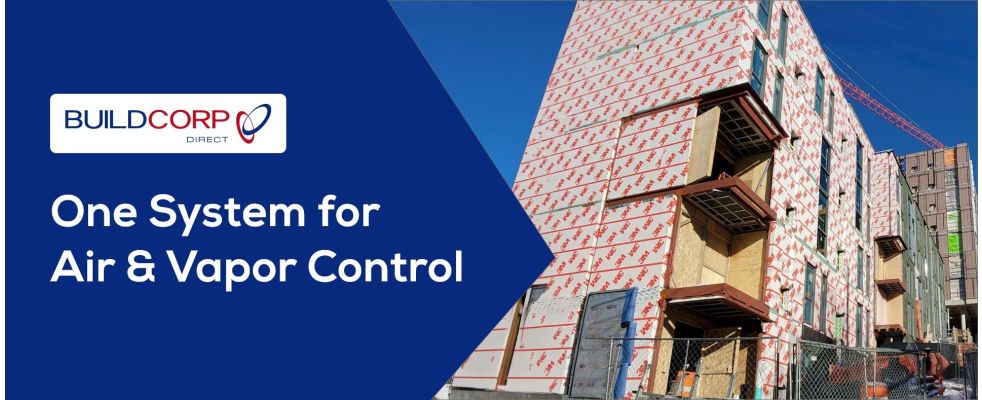
Air barriers stop uncontrolled airflow, while vapor barriers control moisture movement through materials. Contractors often use integrated solutions like 3M Air and Vapor Barrier 3015NP, a single self-adhered membrane designed to control both air leakage and moisture in one application.
What Is an Air Barrier?
An air barrier is a system that prevents uncontrolled air movement through a building envelope. It reduces drafts, energy loss, and moisture carried by airflow.
Air movement can carry heat and moisture into wall systems. This can reduce insulation performance and cause long-term damage.
Contractors use solutions like 3M Air and Vapor Barrier 3015NP to create a continuous air control layer while also managing moisture within the same membrane.
Key functions of an air barrier:
- Stops air leakage through walls and joints
- Improves energy efficiency
- Reduces drafts and pressure imbalances
- Limits moisture carried by airflow
Air barriers must be continuous and properly sealed to work effectively.
Air barriers stop airflow, improving energy efficiency and reducing moisture movement.
What Is a Vapor Barrier?
A vapor barrier controls moisture diffusion through materials. It slows or blocks water vapor moving through walls.
Moisture can pass through materials even if there is no air movement. This process is called vapor diffusion.
Vapor barriers are used to prevent condensation inside walls which helps avoid mold, rot, and structural damage.
While traditional systems required separate vapor and air control layers, modern membranes like 3M Air and Vapor Barrier 3015NP combine both functions into a single application.
Key functions of a vapor barrier:
- Controls moisture diffusion
- Prevents condensation buildup
- Protects insulation and framing
- Improves long-term durability
Vapor barriers control moisture movement through materials and prevent condensation issues.
What Is the Difference Between an Air Barrier and a Vapor Barrier?
Air barriers and vapor barriers solve different problems in construction. They are often used together but should not be confused for one another.
Air Barrier:
- Controls airflow
- Stops drafts and air leakage
- Moves moisture carried by air
Vapor Barrier:
- Controls moisture diffusion
- Slows vapor movement through materials
- Prevents condensation inside assemblies
Modern systems like 3M Air and Vapor Barrier 3015NP combine both air barrier and vapor control functions into a single membrane. Products like 3M Air and Vapor Barrier 3015NP provide both air sealing and vapor control in one easy-to-install solution.
Air barriers control airflow while vapor barriers control moisture diffusion.
Why Do Commercial Buildings Need Both Systems?
Commercial buildings face higher performance demands than residential structures. Air leakage and moisture problems can lead to energy loss and structural damage.
Using both air barriers and vapor barriers help contractors meet building codes and performance standards.
Benefits of combining air and vapor control:
- Improved energy efficiency
- Reduced HVAC load
- Better indoor comfort
- Protection against moisture damage
- Longer building lifespan
Systems like 3M air and vapor barrier products help create a complete building envelope solution for commercial buildings.
Controlling both air and vapor is essential for meeting building codes and performance standards, whether through separate systems or integrated solutions like 3M Air and Vapor Barrier 3015NP.
Where Are Air Barriers and Vapor Barriers Installed?
Placement of air and vapor barriers depends on climate, building type, and wall assembly.
Common Air Barrier Locations:
- Exterior wall sheathing
- Interior drywall systems
- Roof assemblies
- Around windows and doors
Common Vapor Barrier Locations:
- Warm side of insulation (in cold climates)
- Exterior layers (in hot, humid climates)
- Below slabs or foundation systems
Contractors often use flexible membrane systems like 3M Air and Vapor Barrier 3015NP to achieve continuous air and vapor control across these areas.
Air and vapor barriers are installed in key building envelope locations based on climate and design.
What Happens If You Use the Wrong Barrier?
Incorrect use of air and vapor barriers can lead to serious problems.
Common Issues:
- Trapped moisture inside walls
- Mold and mildew growth
- Reduced insulation performance
- Structural damage over time
For example, placing a vapor barrier in the wrong location can trap moisture instead of controlling it as intended.
Using proven integrated systems like 3M Air and Vapor Barrier 3015NP helps reduce these risks by delivering consistent air and vapor control in a single layer.
Incorrect barrier placement can cause moisture problems and reduce building performance.
How Do Contractors Choose the Right System?
Choosing the right system for your air barriers and vapor barriers depends on several factors.
Key Considerations:
- Climate zone
- Building use and occupancy
- Wall assembly design
- Local building codes
- Moisture risk levels
Contractors often select integrated systems that combine air and vapor control. The 3M air and vapor barrier range at Buildcorp Direct offers solutions designed for consistent performance across commercial applications.
Air and vapor barrier selection depends on climate, design, and performance requirements.
How Do Air and Vapor Barriers Improve Energy Efficiency?
Air leakage is a major source of energy loss. Studies show that uncontrolled air movement can significantly reduce insulation performance.
Air barriers reduce this loss by sealing the building envelope. Vapor barriers prevent moisture buildup that can weaken insulation.
Together, they help maintain stable indoor temperatures and reduce energy costs.
Using high-performance systems like 3M Air and Vapor Barrier 3015NP supports long-term efficiency by controlling both airflow and moisture within one membrane.
Air and vapor barriers improve energy efficiency by controlling airflow and moisture.
Why Should Contractors Understand the Difference?
Understanding the difference between air barriers and vapor barriers is essential for building performance. Each system plays a specific role, but both are needed for effective moisture and air control.
Using reliable products, such as those in the 3M air and vapor barrier range, helps contractors create durable, efficient building envelopes. Proper installation and system selection ensure long-term results and fewer problems.
If you're a contractor planning a commercial project, explore solutions like 3M Air and Vapor Barrier 3015NP, a single membrane designed to control both airflow and moisture, available through Buildcorp Direct. These systems are designed to help you control airflow, manage moisture, and deliver high-performance results on every build.


