
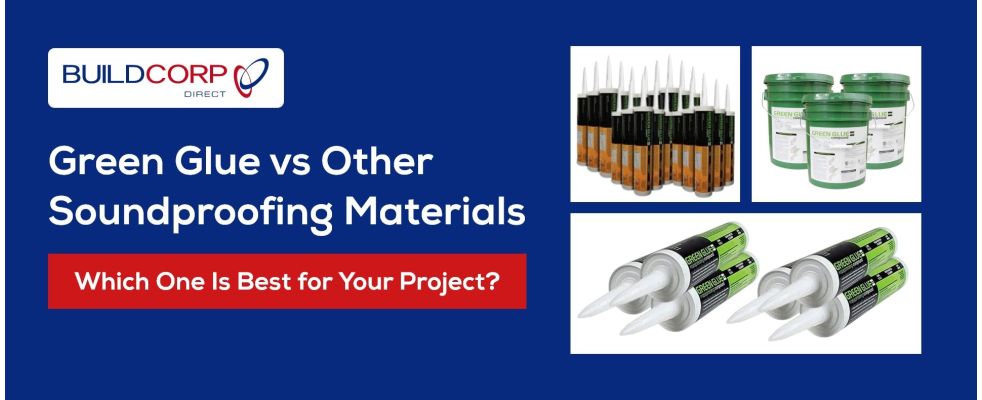
Green Glue is best for reducing sound transmission by controlling vibration between rigid surfaces. Other soundproofing materials serve different purposes, such as absorbing echo or blocking airborne noise. The best solution depends on your noise source, structure, and soundproofing goals.
What Are the Basics of Soundproofing?
Soundproofing reduces how much noise travels from one space to another. It focuses on blocking, damping, or isolating sound energy.
There are four main sound paths:
- Air gaps
- Wall vibration
- Structural connections
- Reflected sound
Efficient soundproofing addresses more than one of these paths.
Soundproofing controls how sound moves through air, structures, and surfaces.
Why Would You Soundproof a Room?
People soundproof rooms to improve comfort, privacy, and usability. Noise affects focus, sleep, and communication.
Common reasons for soundproofing include:
- Shared walls in homes or apartments
- Home theatres or media rooms
- Music practice spaces
- Office or meetings rooms
- Mechanical or equipment noise
Soundproofing reduces noise transfer and improves daily living.
Soundproofing improves privacy, comfort, and room functionality.
What Are the Main Benefits of Soundproofing?
Soundproofing offers both functional and long-term benefits. Even small improvements can make a space more usable.
Key benefits:
- Reduced noise complaints
- Better sleep and concentration
- Improved sound quality inside rooms
- Increased property value
- Enhanced privacy
The right materials improve results without unnecessary construction.
Soundproofing improves comfort, usability, and long-term value.
What Is the Difference Between Soundproofing and Sound Absorption?
Soundproofing and sound absorption solve different problems. They are often confused but work in different ways.
Soundproofing:
- Blocks or reduces sound transfer
- Stops noise from leaving or entering a room
- Uses mass, damping, and sealing
Sound absorption:
- Reduces echo and reverberation
- Improves sound clarity inside a room
- Uses soft or porous materials
Both methods work best when combined properly.
Soundproofing blocks noise transfer, while sound absorption controls echo.
What Is Green Glue and How Does It Work?
Green Glue is a sound-damping compound used between rigid layers. It reduces vibration by converting sound energy into heat.
It is not an adhesive. It works through friction when sandwiched between surfaces.
Where Green Glue works best:
- Between drywall layers
- Between plywood or cement board
- In wall and ceiling assemblies
It is most effective when used with added mass.
Green Glue reduces sound by damping vibration between rigid layers.
How Does Green Glue Compare to Acoustic Foam Panels?
Acoustic foam panels absorb sound reflections inside a room. They do not block sound from passing through walls.
Key differences:
- Green Glue reduces noise transmission
- Foam panels reduce echo
- Foam panels do not add mass
- Green Glue works inside wall assemblies
Foam panels improve room acoustics, not soundproofing.
Acoustic foam panels absorb echo, while Green Glue reduces sound transfer.
How Does Green Glue Compare to PVC Soundproofing Sheets?
PVC soundproofing sheets block sound by adding mass. They are dense and flexible materials installed within walls or ceilings.
Key differences:
- PVC sheets block airborne noise
- Green Glue damps vibrations
- PVC sheets add weight
- Green Glue improves layered systems
PVC sheets work well when combined with damping.
PVC sheets add mass, while Green Glue controls vibration.
How Does Green Glue Compare with PUR Soundproof Sheets?
PUR soundproof sheets are polyurethane-based materials. They reduce vibration and impact noise in certain applications.
Key differences:
- PUR sheets absorb impact energy
- Green Glue damps airborne sound vibration
- PUR sheets work under floors or panels
- Green Glue works between rigid layers
Each serves a different noise source.
PUR sheets absorb impact noise, while Green Glue targets airborne vibration.
How Does Green Glue Compare to Adhesive Bitumen Soundproof Mats?
Bitumen mats are heavy, adhesive-backed materials. They add mass and reduce vibration in thin structures.
Key differences:
- Bitumen mats add weight and stiffness
- Green Glue remains flexible
- Mats are surface-applied
- Green Glue is hidden between layers
Bitumen mats are common in mechanical and automotive uses.
Bitumen mats add mass, while Green Glue improves layered damping.
How Does Green Glue Compare to Acoustical Caulk?
Acoustical caulk seals gaps to stop air and sound leaks. It stays flexible but does not damp large surface vibration.
Key differences:
- Acoustical caulk seals air gaps
- Green Glue dampens panel vibration
- Caulk is used at joints
- Green Glue is used between layers
Both are essential but serve different purposes.
Acoustical caulk seals gaps, while Green Glue controls vibration.
Which Soundproofing Material Is Best for Your Project?
The best material depends on your sound problem and structure.
Choose Green Glue if:
- Noise travels through walls or ceilings
- You can add a second layer
- You need vibration control
Choose other materials if:
- You need echo control
- You cannot add wall layers
- You are treating impact or mechanical noise
Most projects will benefit from a combination of Green Glue and another material.
The best solution depends on noise type, structure, and installation options.
Should You Use Green Glue or Another Soundproofing Material?
Green Glue is one of the most effective solutions for reducing sound transmission through walls and ceilings. However, it often works best when combined with sealing, mass, and absorption where needed. Understanding how each material works ensures better soundproofing results and fewer construction mistakes.
If you’re planning a soundproofing project, Buildcorp Direct offers Acoustic Noise Proofing Green Glue Compound and other professional-grade materials for every application. Visit the Buildcorp Direct product catalog to compare solutions and choose the right materials for your project with confidence.


